
Section 17-B Industrial Disputes Act: Rajasthan High Court Clarifies Workman Entitlement to Last Drawn Wages, Not Minimum Wages During Pendency
The Division Bench of the Rajasthan High Court at Jaipur, in D.B. Special Appeal Writ No. 113/2025, delivered an important ruling clarifying the scope of Section 17-B of the Industrial Disputes Act, 1947 and the entitlement of a workman to wages during the pendency of litigation. The case arose from a dispute involving the University of Rajasthan and a workman, where the primary issue was whether a workman is entitled to minimum wages or only the last drawn wages while the employer’s challenge to a Labour Court award is pending before the High Court. The Court examined earlier precedents and statutory provisions to determine the correct interpretation of the law.
The Bench observed that the controversy was no longer res integra because earlier Division Bench decisions had already settled that during the pendency of proceedings, the workman is entitled to wages based on the last drawn salary rather than revised pay scales or enhanced minimum wages. The Court relied on prior judgments, including cases relating to Gram Panchayat Manoharpura and other authorities, which held that the purpose of Section 17-B is to provide subsistence support to the workman so that he does not suffer financial hardship while defending litigation. This payment acts as a safeguard against starvation but does not create a right to increased or revised wages.
While the respondent argued that minimum wages fixed by the State should be treated as maintenance allowance, the Court rejected this interpretation. Referring to judicial precedents, the Bench clarified that Section 17-B grants a statutory right to receive “full wages last drawn,” and although constitutional courts may in exceptional circumstances grant a higher amount in the interest of justice, such directions remain outside the strict framework of Section 17-B. Therefore, equating minimum wages with maintenance allowance was found to be inconsistent with the statutory scheme.
A significant aspect of the judgment was the Court’s interpretation of the Minimum Wages Act, 1948. The Bench held that minimum wages apply only to persons who are actually employed and working in an industry. A workman whose termination is under challenge and who is not presently in service cannot claim minimum wages merely because litigation is pending. Instead, during this period of non-employment, the legal mechanism available is subsistence allowance under Section 17-B of the Industrial Disputes Act. This distinction was crucial in setting aside the Single Judge’s direction that required payment of minimum wages during the pendency of the writ petition.
Consequently, the Division Bench partly allowed the appeal and modified the earlier order. It ruled that the employer must continue to pay the workman the full wages last drawn, along with any admissible maintenance allowance, until the main petition is finally decided. However, payment of revised minimum wages or increments during this period was held to be beyond the scope of Section 17-B. The Court also requested expeditious disposal of the pending petition before the Single Judge to ensure timely resolution of the dispute.
Overall, the judgment reinforces a consistent judicial approach that Section 17-B is a protective provision intended to sustain a workman during litigation but not to enhance his financial entitlement beyond the last drawn wages. By distinguishing between subsistence allowance and minimum wages, the Rajasthan High Court clarified the limits of judicial discretion and ensured that the statutory framework of the Industrial Disputes Act is interpreted strictly while still balancing the interests of both employers and employees.
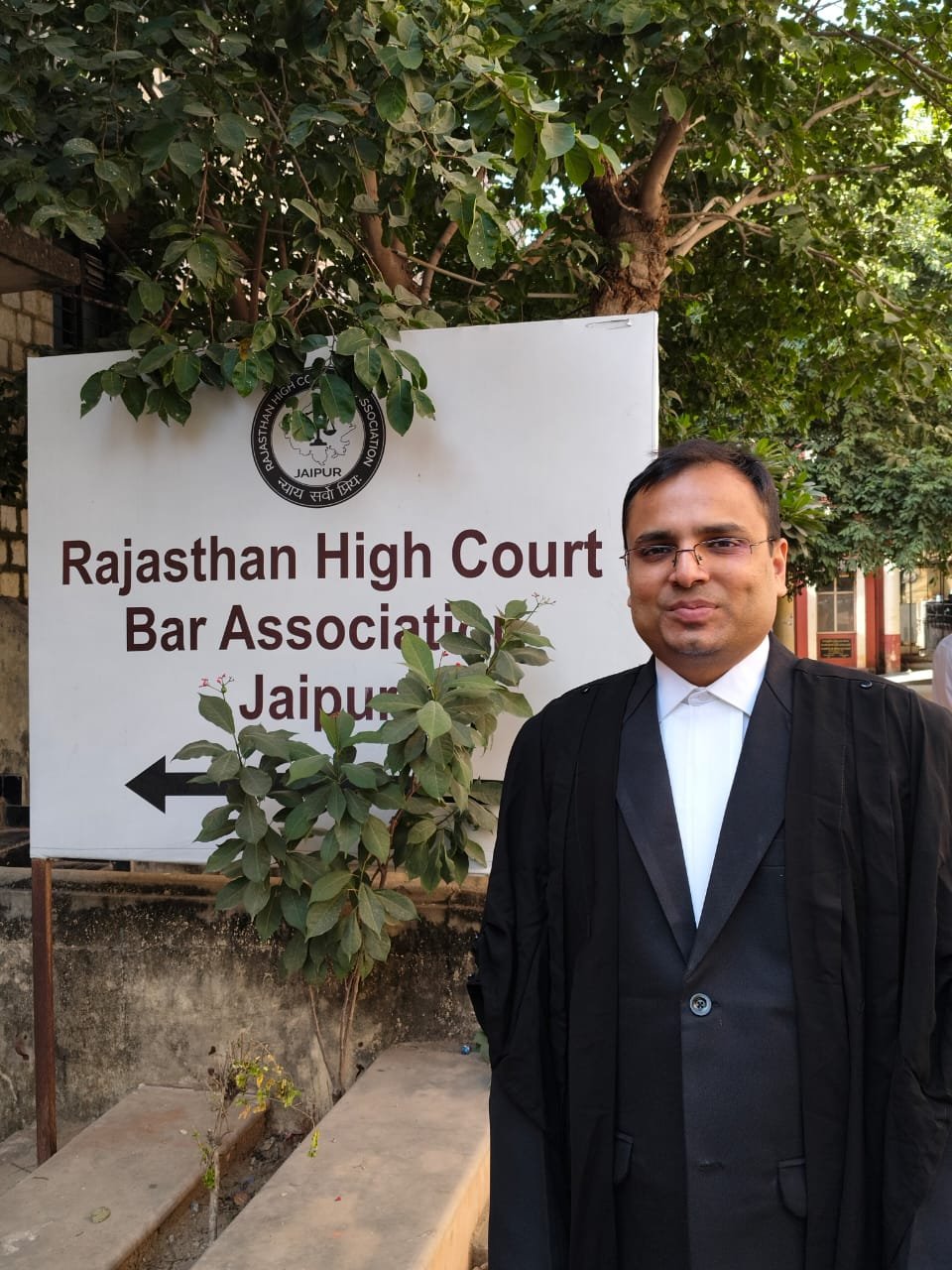
Bhuvnesh Kumar Goyal
Advocate in Jaipur High Court


 Call: 7300056080
 Email: advocatebhuvneshgoyal@gmail.com
 Office: 109, Fortune Heights, Ahinsa Circle, C-Scheme, Jaipur-302001