
JVVNL Forcing Plot Owners to buy electricity from builder is illegal : Rajasthan High Court, Jaipur Bench
- Janak Singh Hada Vs State of Rajasthan & Others and Connected Matters
- D.B. Civil Writ Petition Number 7445/2025
- Date of Judgment : 07.01.2026
In a significant judgment protecting the rights of homeowners, the Jaipur Bench of the Rajasthan High Court has granted relief to plot owners of Vatika Infotech City who were denied individual electricity connections for years. The case arose from a long-standing dispute where residents of a JDA-approved colony were forced to purchase electricity from private developer-linked companies instead of receiving direct domestic electricity connections from Jaipur Vidyut Vitran Nigam Limited (JVVNL). The High Court’s order dated 07 January 2026 has clarified the legal position on single point electricity connections, private monopoly, and the statutory duty of distribution companies.
Vatika Infotech City is a large residential township in Jaipur with more than 3,500 plots approved by the Jaipur Development Authority. Despite residents owning freehold plots and having constructed houses on their own land, JVVNL consistently refused to provide individual electricity connections. Instead, residents were compelled to buy electricity through sub-meters installed by private companies associated with the builder, which were operating without any licence under the Electricity Act, 2003. This practice continued for more than fifteen years, causing serious hardship to residents.
Aggrieved plot owners, including Janak Singh Hada and other similarly placed residents, approached the Rajasthan High Court by filing writ petitions under Article 226 of the Constitution of India. The petition challenged Regulation 6.3 of the Rajasthan Electricity Regulatory Commission (Electricity Supply Code and Connected Matters) Regulations, 2021, alleging that it was being misused to justify an illegal monopoly of electricity distribution by non-licensee private companies. The petitioners also challenged the refusal letter dated 17.11.2023 by JVVNL, which directed residents to obtain electricity from the developer instead of granting direct connections.
The petitioners argued that under Section 43 of the Electricity Act, 2003, every distribution licensee has a statutory duty to supply electricity to an owner or occupier of premises upon application. They further contended that Regulation 6.3 itself contains a proviso that clearly protects the right of an individual consumer to demand direct electricity supply from the distribution licensee. Despite this, JVVNL continued to deny connections, citing reasons such as “single point connection” and “non-electrification of the colony,” while simultaneously allowing private companies to sell electricity within the same colony.
After examining the pleadings, documents, and the connected writ petitions, the Rajasthan High Court made crucial observations. The Court held that JVVNL, being a distribution licensee under the Electricity Act, cannot shift its statutory responsibility onto a private developer. The Court found that Regulation 6.3 does not prohibit individual electricity connections and, in fact, mandates release of direct connections when demanded by eligible applicants. The practice of forcing residents to buy electricity from a builder through a single point connection was held to be arbitrary, unreasonable, and contrary to law.
The High Court further recognised that electricity is an essential service and forms an integral part of the right to life under Article 21 of the Constitution of India. Denial of electricity to residents who have complied with all requirements and are willing to pay applicable charges was found to be a clear violation of constitutional and statutory rights. The Court rejected the argument that the colony was not electrified, observing that such a stand was neither fair nor justified when electricity was already being supplied through private intermediaries.
By its final order, the Rajasthan High Court directed Jaipur Vidyut Vitran Nigam Limited to issue independent electricity connections to the petitioners after completion of necessary formalities and payment of applicable charges. The Court ordered that such connections must be released within a period of two months from the date of the order. While the challenge to the constitutional validity of Regulation 6.3 was kept open for consideration in an appropriate case, the Court granted substantial relief to the residents by enforcing their right to direct electricity supply.
This judgment is extremely important for plot owners and residents living in private colonies across Rajasthan. It sends a clear message that developers cannot run parallel electricity distribution systems without a licence and that distribution companies cannot abdicate their statutory duties. The decision also curbs the practice of creating illegal monopolies over essential services like electricity and strengthens consumer rights in urban residential colonies.
In conclusion, the Rajasthan High Court’s decision in the Vatika Infotech City electricity case reaffirms that electricity is not a privilege controlled by builders but a legal right guaranteed under law. Distribution licensees are bound to serve consumers directly, and regulatory provisions cannot be misused to deny citizens access to basic necessities. This judgment will serve as a strong precedent for similar disputes involving denial of electricity connections in developer-led townships across the state.
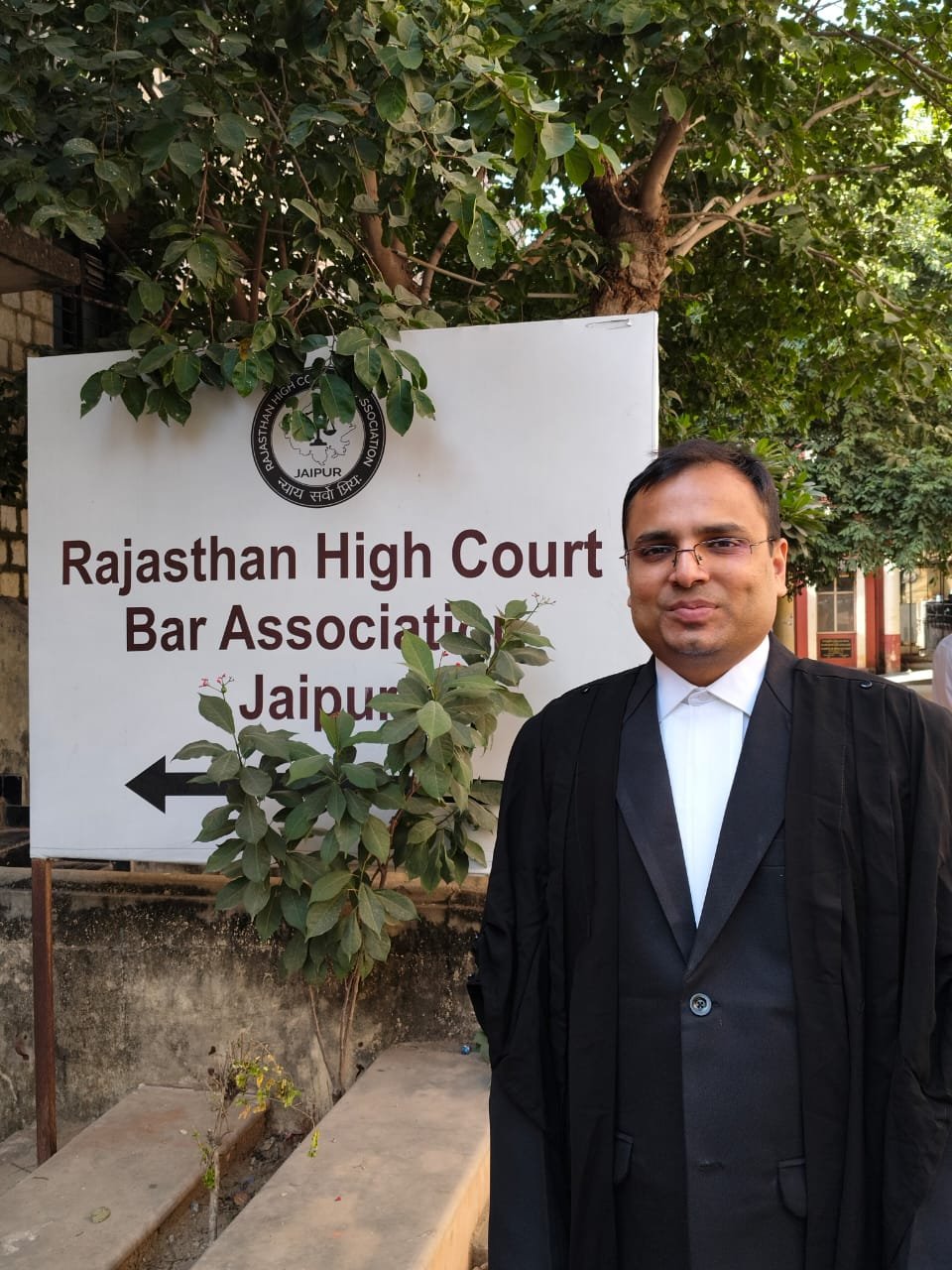
Counsel for the Petitioners
Bhuvnesh Kumar Goyal
Advocate in Jaipur High Court


 Call: 7300056080
 Email: advocatebhuvneshgoyal@gmail.com
 Office: 109, Fortune Heights, Ahinsa Circle, C-Scheme, Jaipur-302001