
Claim of maintenance by a divorced wife
A divorced wife has a statutory right to claim maintenance under Section 125 of the Code of Criminal Procedure, 1973. Every divorced wife, if otherwise eligible and unable to maintain herself, is entitled to the benefit of maintenance allowance. Divorce by itself does not extinguish the right of maintenance, and the obligation of the husband continues unless specifically discharged in accordance with law.
Where the husband fails to prove that he was actually paying maintenance to the divorced wife, and merely contends that she forfeited her right due to divorce or an earlier consent decree, the essential condition of “neglect or refusal to maintain” stands satisfied. In such circumstances, a divorced wife is not required to plead or prove that she was not living separately by mutual consent. This principle has been clearly laid down by the Supreme Court in Bai Tahira v. Ali Hussain Fissalli (1979 Cr LJ 151 SC) and reaffirmed by the Kerala High Court in Kamalakshi v. Sankaran (AIR 1979 Ker 116).
Under Section 127(3)(b) of the CrPC, a husband can seek absolution from his obligation under Section 125 towards a divorced wife only on proof that he has paid a sum in accordance with customary or personal law, and that such sum is reasonably sufficient to substitute the maintenance allowance. Mere assertion of divorce or settlement is not enough. This legal position was authoritatively settled in Bai Tahira v. Ali Hussain Fissalli (1979 Cr LJ 151 SC) and followed in Kamalakshi v. Sankaran (AIR 1979 Ker 116).
The right of a divorced wife to receive maintenance flows directly from her status as a divorced wife. This right does not depend upon any further condition once divorce is established and inability to maintain herself is shown, as held in M. Nanu v. Vasantha (1986 Cr LJ 652). After divorce, the husband cannot insist that the wife should live with him, and consequently, the divorced wife is under no obligation to prove sufficient cause for living separately. This principle has been upheld in Velukutti v. Prasanna Kumar (1985 Cr LJ 1558 Ker) and Hari Singh v. Gulab Devi II (1989) DMC 439 (Raj).
Even where the marriage has been dissolved by mutual consent, the divorced wife, if unable to maintain herself, is entitled to claim maintenance until she remarries. This position was clearly recognized in Sadasivam Pillai v. Vijaya Lakshmi (1989 Cr LJ 765).
It is now a well-settled proposition of law that even where there is a valid decree of divorce, the wife remains entitled to claim maintenance under Section 125 of the CrPC. A decree of divorce cannot be used as a ground to deny maintenance, as held in Chandrakant v. Sulochana (1997 Cr LJ 520 Bom).
Further, even when a decree of divorce is passed against the wife on the ground of desertion, she is not barred from claiming maintenance against her former husband from the date of the decree. This legal position has been affirmed in Jashelal v. Pushpabati (1998 Cr LJ 4740) and Harish v. Kabita Bai (2007 Cr LJ (NOC) 724 MP).
Similarly, where a decree for restitution of conjugal rights had been passed prior to divorce, such decree loses all relevance once the marriage stands dissolved. After divorce, the earlier decree for restitution of conjugal rights ceases to have any legal significance, and the divorced wife cannot be denied maintenance under Section 125 CrPC. This principle was upheld in Koli Gomiben Shyamji v. Koli Laxman Premji (1998 Cr LJ 429 Guj).
The Supreme Court has categorically held that a woman, after divorce, is entitled to claim maintenance from her former husband if she is unable to maintain herself and so long as she does not remarry. The ex-husband continues to remain under a statutory duty and legal obligation to provide maintenance to his divorced wife. This authoritative declaration of law is found in Rohtash Singh v. Ramendri (AIR 2000 SC 952).
The fact that at the time of an initial compromise the wife did not claim maintenance, or that she did not seek maintenance at the disposal of the matrimonial suit, does not bar her from claiming maintenance at a subsequent stage. Any agreement or understanding whereby a wife relinquishes her right to future maintenance has no legal sanction, being opposed to public policy. This position has been reiterated in Bishnupriya Bhuniya v. Jhumi Banik (AIR 2007 NOC 657 Gau).
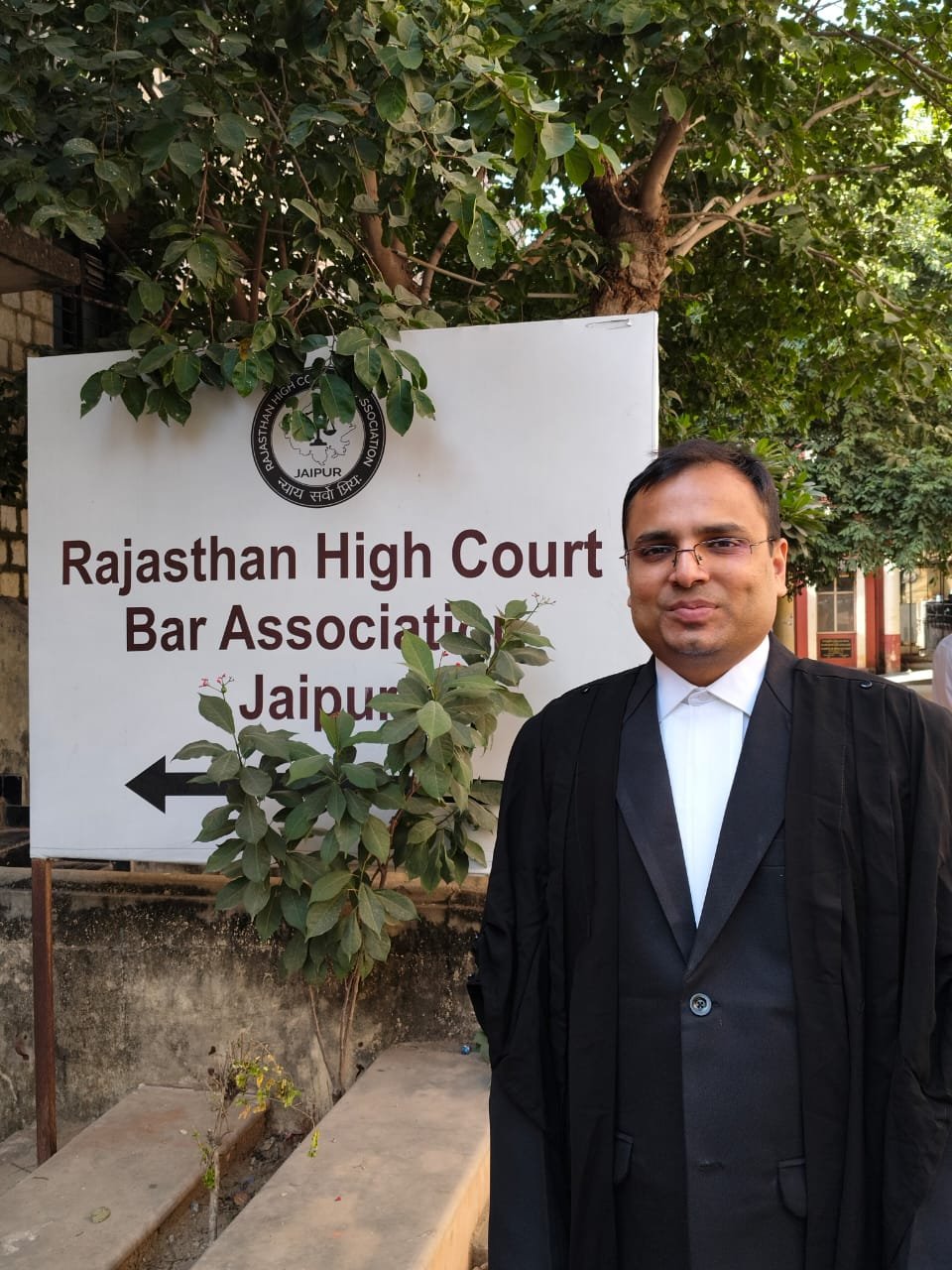
By Advocate Bhuvnesh Kumar Goyal
Advocate in Jaipur High Court


 Call: 7300056080
 Email: advocatebhuvneshgoyal@gmail.com
 Office: 109, Fortune Heights, Ahinsa Circle, C-Scheme, Jaipur-302001